As Melbourne summers get hotter, ceiling fans are becoming essential in Australian homes. They're energy-efficient, cost-effective to run, and can reduce your air conditioning bills by making rooms feel cooler.
But not all ceiling fans are created equal, and improper installation can be noisy, inefficient, or even dangerous. At Power Amp Electrical, we install ceiling fans across Western Melbourne and Geelong—here's what we've learned about choosing and installing the right fan.
Why Install a Ceiling Fan?
Energy Efficiency
A ceiling fan costs about 2-3 cents per hour to run, compared to 25-70 cents per hour for air conditioning. That's a significant saving over a Melbourne summer.
Feels Cooler
The wind-chill effect from a ceiling fan can make a room feel 4-6°C cooler—often enough to avoid turning on the air conditioner.
Year-Round Use
Most quality ceiling fans have a reverse function for winter. Running clockwise on low pushes warm air (which rises to the ceiling) back down into the room, improving heating efficiency.
Adds Value
Well-placed ceiling fans are attractive to home buyers, especially in bedrooms and living areas.
Choosing the Right Ceiling Fan Size
Fan size is critical. Too small, and it won't move enough air. Too large, and it'll look awkward and may be noisy.
Size Guide
| Room Size | Fan Diameter | Room Examples |
|---|---|---|
| Up to 9m² | 900mm (36") | Small bedroom, bathroom |
| 9-15m² | 1200mm (48") | Standard bedroom, home office |
| 15-25m² | 1320mm (52") | Living room, master bedroom |
| 25m²+ | 1400mm+ (56"+) or 2 fans | Large living areas, open plan |
Ceiling Height Considerations
- Standard ceilings (2.4-2.7m): Use a flush-mount or short-rod fan
- High ceilings (2.7-3.5m): Use a longer drop rod (30-60cm)
- Very high ceilings (3.5m+): Use extended drop rod; may need an electrician to assess
Safety rule: Fan blades should be at least 2.1m from the floor and 30cm from the ceiling for proper airflow.
Types of Ceiling Fans
Standard Ceiling Fans
- 3-5 blades
- Various styles from traditional to modern
- Most affordable option
- Perfect for most rooms
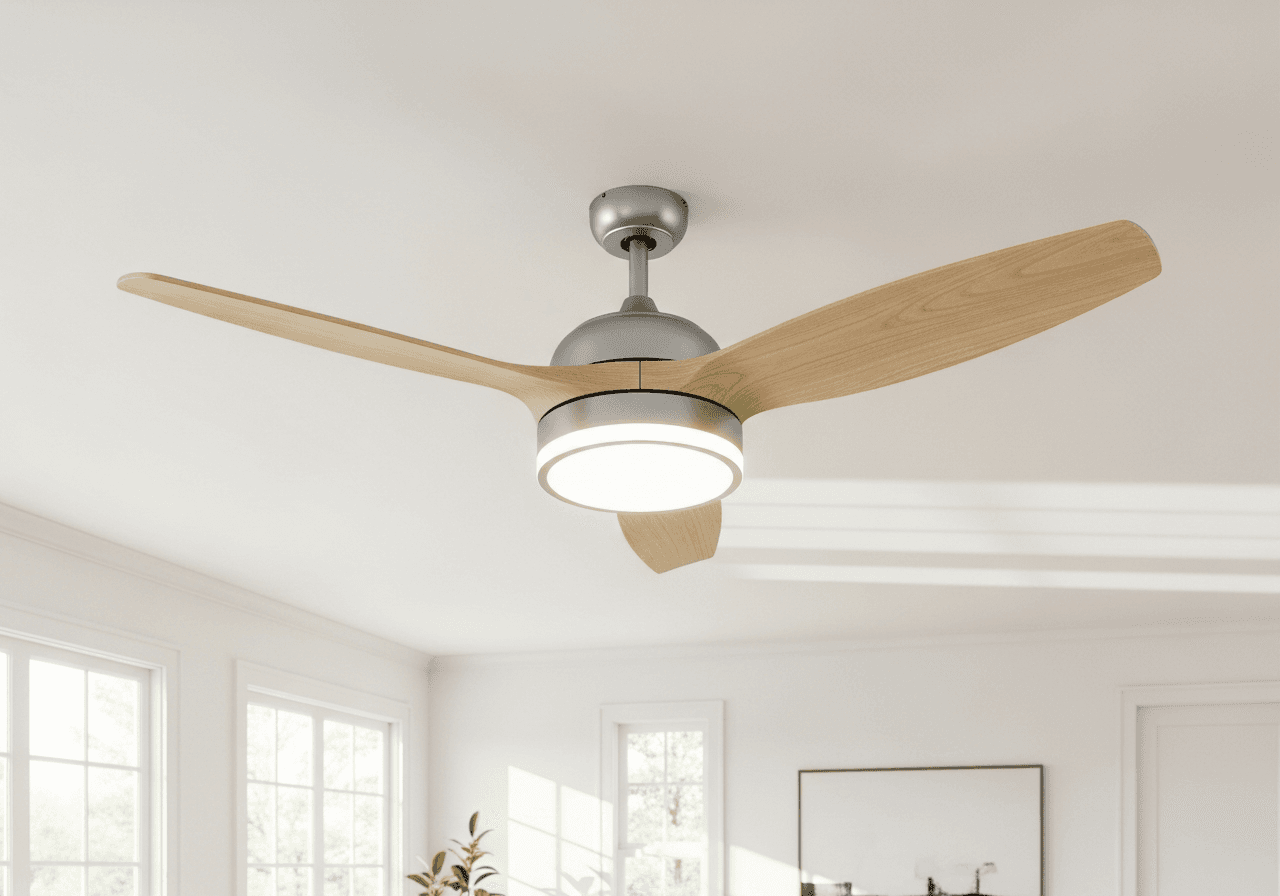
Ceiling Fans with Lights
- Combines lighting and cooling
- Great for rooms with a single ceiling point
- Available in many styles
- Consider LED for energy efficiency
DC Motor Fans
- Use 70% less energy than AC motors
- Whisper-quiet operation
- More speed settings (often 6+)
- Higher upfront cost, lower running cost
- Best for bedrooms
Outdoor Ceiling Fans
- IP-rated for weather resistance
- Designed for patios, pergolas, alfresco areas
- Must be specifically rated for damp/wet locations
Looking for outdoor electrical solutions? See our outdoor entertaining electrical guide.
Features to Look For
Essential Features
- Reverse function: For winter use
- Multiple speeds: At least 3, preferably 5+
- Quiet operation: Look for under 50dB rating
- Quality motor: Copper windings, not aluminium
Nice-to-Have Features
- Remote control: Convenient, especially for high ceilings
- Wall controller: Permanent, doesn't need batteries
- Timer function: Auto-off for energy saving
- Smart integration: Works with Google/Alexa
- Dimmable light: If fan includes lighting
Popular Ceiling Fan Brands in Australia
| Brand | Strengths | Price Range |
|---|---|---|
| Hunter Pacific | Quality motors, wide range | $300-800 |
| Fanco | Modern designs, DC options | $250-600 |
| Mercator | Good value, stylish | $200-500 |
| Brilliant | Budget-friendly, decent quality | $150-350 |
| Beacon Lighting | Trendy designs, many options | $250-700 |
| Big Ass Fans | Premium, commercial-grade | $1,000+ |
We install all brands. If you have a specific fan in mind, we can source and install it.
Why You Need a Licensed Electrician
It's the law. In Victoria, all electrical work—including ceiling fan installation—must be performed by a licensed electrician. This includes:
- Connecting wiring to the mains
- Installing new ceiling points
- Replacing old fans with new ones
- Adding remote control receivers
Beyond legal requirements, there are practical reasons:
Safety
- Improper installation can cause fires
- Fans can fall if not mounted correctly
- Electrical faults can cause shocks
Structural Integrity
- Fans need proper ceiling support (not just plasterboard)
- Heavy fans may need additional bracing
- Our team includes experts who can assess and reinforce ceilings
Warranty Protection
- Many fan warranties require professional installation
- DIY installation often voids the warranty
- We provide installation certificates
The Installation Process
1. Site Assessment
We check:
- Existing ceiling point or need for new one
- Ceiling structure and support
- Appropriate fan size for the room
- Electrical circuit capacity
2. Preparation
- Turn off power at switchboard
- Remove old fitting if present
- Install or reinforce ceiling bracket
- Run any new wiring if required
3. Installation
- Mount fan bracket to ceiling
- Assemble and hang fan motor
- Attach blades
- Install light kit (if applicable)
- Install wall controller or pair remote
4. Testing
- Test all speeds
- Check for wobble or noise
- Test light functions
- Demonstrate operation to homeowner
Installation Costs
| Scenario | Estimated Cost |
|---|---|
| Simple replacement (existing point) | $150-250 |
| New fan with new ceiling point | $250-400 |
| Fan with reinforced mounting | $300-450 |
| Outdoor fan installation | $300-500 |
Labour only—fan cost additional
Fan + installation packages: From $350-700 (fan included)
Common Installation Mistakes (We See These Often)
1. Wrong Size Fan
Too small = insufficient airflow. Always measure your room first.
2. Mounted Too Close to Ceiling
Fans need 30cm clearance above for proper air circulation.
3. Weak Ceiling Mount
Standard light fittings aren't designed for fan weight and vibration.
4. Wrong Location
Centre of room isn't always best. Consider furniture layout and airflow paths.
5. Ignoring Blade Clearance
Fans near walls or sloped ceilings need appropriate clearance (at least 30cm from any obstruction).
Ceiling Fan Maintenance Tips
To keep your fan running smoothly:
- Clean blades monthly during heavy use (dust causes wobble)
- Check mounting screws annually—vibration can loosen them
- Listen for changes in sound (may indicate motor issues)
- Balance the fan if it develops a wobble (balancing kits are available)
- Don't oil sealed motors—most modern fans have sealed bearings
Frequently Asked Questions
How long does ceiling fan installation take?
A straightforward replacement takes 30-60 minutes. New installations with wiring take 1-2 hours.
Can you install a fan where there's currently a light?
Usually yes. We'll assess whether the existing mounting point is suitable and reinforce if necessary.
Do ceiling fans use a lot of electricity?
No. A ceiling fan on high typically uses 50-75 watts—about the same as an incandescent light bulb. Running cost is 2-3 cents per hour.
Can I install a ceiling fan on a sloped ceiling?
Yes, with the right mounting kit. Most fans come with or offer angled mounting adapters for slopes up to 30°.
What if my ceiling is too low?
Hugger/flush-mount fans are designed for low ceilings. They sit almost flat against the ceiling while still providing good airflow.
Flexible Payment Options
Upgrading to multiple ceiling fans? Power Amp Electrical offers interest-free finance through Brighte for larger projects.
- 0% interest payment plans
- Quick online approval
- Spread the cost of multiple fans
Beat the Heat This Summer
Get your ceiling fans installed before Melbourne's summer heat hits. We install fans across Western Melbourne and Geelong with same-week availability.
Our ceiling fan service includes:
- Expert advice on fan selection
- Professional installation by licensed electricians
- All brackets, mounting hardware, and wiring
- Testing and demonstration
- Clean-up after installation
Book your installation:
📞 Call Josh on 1300 797 267
Power Amp Electrical is a licensed electrical contractor (REC-34500) serving Western Melbourne and Geelong. All installations include Certificates of Electrical Safety.